
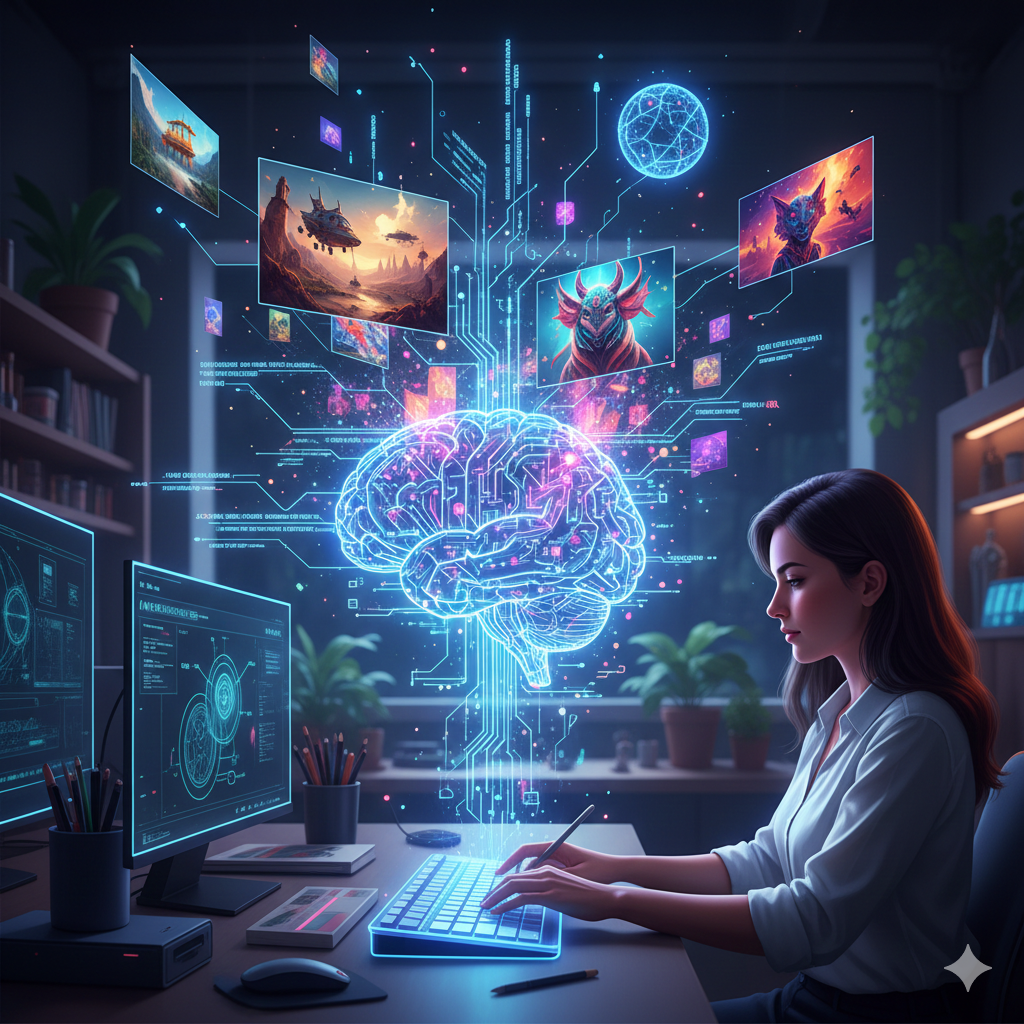
In today’s dynamic and fast-evolving world, businesses are under constant pressure to innovate in order to stay ahead of the curve. Competition is stronger than ever, customer expectations are rising, and technology is advancing at lightning speed. To survive and grow, companies must adopt modern solutions that improve efficiency while delivering exceptional customer experiences.
Among these innovations, Artificial Intelligence for businesses has emerged as a true game-changer. AI in business is no longer a futuristic idea—it is a practical reality that is transforming how organizations operate, make decisions, and scale. The future of business is closely connected to AI integration in business, unlocking unprecedented levels of efficiency, personalization, and competitive advantage.
Introduction to AI in Business
AI in business refers to computer systems designed to perform tasks that typically require human intelligence. These tasks include learning from data, recognizing patterns, making decisions, and predicting outcomes.
In practical terms, Artificial Intelligence for businesses can range from simple automation systems to advanced predictive analytics platforms. Today, many organizations rely on AI tools for companies to analyze customer behavior, forecast trends, and streamline operations.
The true strength of AI lies in its ability to process vast amounts of data quickly and accurately—something humans cannot do at scale. This allows companies to make smarter, data-driven decisions, reduce errors, and maximize resources. Beyond efficiency, AI is reshaping how businesses engage with customers, employees, and markets.
Increasing Operational Effectiveness with AI
One of the most immediate benefits of AI integration in business is improved operational efficiency. Tasks that once required hours of manual effort can now be handled through AI business automation.
AI-powered systems manage invoicing, inventory control, supply chain logistics, and even HR processes like recruitment and onboarding. These AI-powered operations not only save time but also reduce costly human errors.
For example, in retail, AI systems predict inventory needs based on seasonal demand, historical sales data, and even social media trends. This forecasting reduces waste, ensures product availability, and increases profitability. In manufacturing, AI business automation enables predictive maintenance by identifying equipment issues before they cause downtime.
Such AI-powered business solutions allow companies to operate more efficiently while focusing on strategic growth.
Transforming Customer Experience
AI is not just improving back-end systems—it is completely redefining how customers interact with businesses.
Through AI in business 2026, companies are delivering highly personalized experiences at scale. AI-powered chatbots and virtual assistants provide 24/7 support, answer queries instantly, and guide customers through purchasing decisions.
E-commerce platforms use AI algorithms to recommend products based on browsing history and preferences, significantly increasing conversion rates. Financial institutions rely on AI to detect fraud in real time, protecting customers and building trust.
By anticipating customer needs and responding quickly, businesses transform ordinary interactions into meaningful experiences. This customer-focused innovation is a major driver in the future of AI in business.
Strategic Decision-Making Powered by AI
Beyond automation and customer engagement, AI plays a crucial role in strategic planning. Often referred to as the “engine of insight,” AI transforms complex datasets into actionable intelligence.
Advanced analytics systems help companies identify patterns and trends that human analysts might overlook. Businesses can predict market shifts, understand consumer behavior, and evaluate strategic decisions before implementation.
This predictive capability is especially valuable in industries like finance, healthcare, and marketing—where making the right decision at the right time can significantly impact outcomes.
By simulating different scenarios, AI helps leaders minimize risks and choose optimal strategies. These AI-powered operations enable organizations to remain competitive in rapidly changing markets.
Fostering Innovation Through AI
AI is not just about efficiency—it is a powerful engine for innovation.
By automating repetitive tasks, employees can focus on creativity and strategy. AI also supports product development and marketing by analyzing trends and consumer preferences.
For instance, AI-driven design tools help architects visualize projects faster, while pharmaceutical companies use AI to accelerate drug discovery. Even in advertising, AI evaluates audience engagement and suggests performance improvements.
This culture of experimentation is a core component of AI and digital transformation 2026, where businesses continuously test, learn, and innovate.
Overcoming Challenges in AI Integration
While the benefits of AI integration in business are significant, challenges remain. Ethical use of AI is critical. Businesses must ensure AI systems are transparent, unbiased, and compliant with privacy regulations.
Workforce adaptation is another concern. Employees may worry about automation replacing jobs. However, successful Artificial Intelligence for businesses focuses on collaboration between humans and machines. Reskilling and training programs are essential to ensure smooth adoption.
Data quality is equally important. AI systems are only as effective as the data they analyze. Companies must invest in strong data governance to maximize the effectiveness of AI-powered business solutions.
The Road Ahead: AI in Business 2026 and Beyond
The future of AI in business is incredibly promising. As technology continues to evolve, AI will handle more complex tasks and deliver deeper insights.
In the coming years, AI in business 2026 will drive hyper-personalized marketing, real-time decision-making, and smarter operational systems. Businesses embracing AI and digital transformation 2026 will discover new business models, improve sustainability efforts, and optimize resource management.
Companies that treat AI as a strategic partner—not just a tool—will thrive. The combination of human creativity and intelligent systems will define the next era of business success.
Conclusion
Today, AI in business is not a distant concept—it is an active force reshaping industries worldwide. From automation and customer engagement to strategic planning and innovation, AI has become an essential pillar of modern enterprises.
The future belongs to organizations that embrace AI integration in business thoughtfully and ethically. By combining human expertise with intelligent systems, companies unlock new levels of efficiency, creativity, and growth.
Simply put, AI is not replacing human intelligence—it is enhancing it. Businesses that recognize and leverage this potential today will shape the future of AI in business tomorrow.